

 What is Ozone?
Ozone is a gas that is present in the atmosphere.
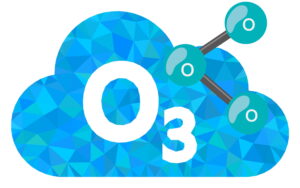
The air we breathe has two bound atoms of oxygen (O2). Ozone has three bound atoms of oxygen (O3).
The air that we breathe is mostly nitrogen (approximately 78%) with about 21% oxygen and trace amounts of other gasses. Ozone has almost zero nitrogen or other gasses.
Medical ozone is created using an ozone generating device that converts medical grade oxygen to ozone. This is done at a specific rate to control the concentration of ozone being generated. The concentration of ozone is generated to be appropriate to the condition being treated. Medical ozone cannot be stored and so must be created just prior to its use.
What is Ozone Therapy?
Ozone therapy is the use of medical grade ozone. There are different methods of applying ozone directly to the area of the body where it is needed.
Is Ozone a New Treatment?
Ozone is not a new treatment.
According to researchers, “Medical O3, used to disinfect and treat disease, has been around for over 150 years”. During World War I, “doctors familiar with O3’s antibacterial properties, and with few other medical resources available to them” were treating wounds with ozone.
How is Ozone Administered?
Ozone therapy has an important feature. If there are digestive issues or if the area being treated has poor circulation, ozone can overcome these barriers because it is applied directly to the affected area to stimulate healing.
There are multiple ways to administer ozone, not all of which are practiced at Green Apple Health Care. The most common methods are topical and injectable.
Topical Ozone Therapy
Like injectable ozone, ozonated water cannot be stored so it is made in-clinic using purified water and medical grade ozone shortly before being applied to the area of the body being treated. The ozone is carefully infused into the water in a concentration appropriate to the condition being treated. Typically, medical gauze soaked in the ozonated water is then applied to the area of the skin being treated.
Injectable Ozone Therapy
Depending upon the condition being treated, injected ozone can be administered in different ways. For injection into a vein, it can be added to IV vitamin therapy. Injection into a vein enables the ozone to reach the entire body through the bloodstream.
There are also injection therapies where the ozone is injected directly into the affected area such as joints, tendons or tissue.
Ozone and Air are Different
Ozone should not be confused with air. They are very different.
The air that we breathe contains mostly nitrogen (approx. 78%) with a relatively small amount of oxygen (about 21.0%). The remaining 1% is a mix of trace amounts of other gases and some water vapour.
Ozone is three bound atoms of oxygen and almost zero nitrogen. This is important to know because oxygen in the blood reacts differently than air in the blood.
Oxygen and Ozone in the Blood
Oxygen and ozone are highly soluble, which means that they easily dissolve in the blood. In the words of one paper on the subject:
It is important to clarify that ozone as well as oxygen do not cause embolism, due to the fact that the blood is thirsty for them and dissolves them very quickly.
Air in the Blood
Air in the blood behaves differently than oxygen or ozone in the blood. Air has relatively little oxygen and about 78% nitrogen; ozone and oxygen have almost no nitrogen. It is the nitrogen in the air that can cause damage if it gets into the bloodstream. Because of its high nitrogen content, air in the bloodstream can be dangerous because “although nitrogen is present in the atmosphere, very little nitrogen dissolves into the blood, because the solubility of nitrogen in blood is very low”. Nitrogen, by far the largest component of the air we breathe, does not readily dissolve into the blood. Oxygen and ozone do readily dissolve in the blood.
Air in the Lungs
Inhaling nitrogen as a component of the air we breathe is harmless.
Human lungs perform a function called “gas exchange”. When you breathe in, the lungs move the oxygen that’s in the air into your bloodstream for distribution to the cells of the body. At the same time, carbon dioxide moves from the bloodstream to the lungs to be exhaled out. So, when you breathe in, the lungs accept the oxygen and exchange it for carbon dioxide which is then breathed out.
The nitrogen in the air we breathe doesn’t play a part in the gas exchange. Nitrogen is unreactive in the lungs. It simply sits there in the lungs and is breathed out again.
What is an Embolism?
An embolism is a blockage in a blood vessel. The blockage prevents blood from moving through a blood vessel to the organs. The lack of blood deprives the organs of oxygen and nutrients and could cause damage to the organs.
Embolism can be caused by blood clots, fat globules, amniotic fluid, or by bubbles created by some gases.
“Gas embolism” may be an unfortunate term because it could give rise to the misconception that any gas introduced into a body is dangerous, and that is simply not the case. One study notes that:
In most cases, gas embolism is air embolism, although it can result from the introduction of gases such as carbon dioxide, nitrous oxide and nitrogen.
There is a big difference between air being injected into a body and ozone being injected into a body.
Nitrogen, by far the largest component of air, does not readily dissolve in the blood. It remains in a gaseous state in atmospheric pressure and can create bubbles that block blood flow (embolism). That is not likely with ozone because ozone contains only a tiny amount of nitrogen. Ozone is three bound atoms of oxygen and readily dissolves in blood.
If air is accidentally injected into a body, it is the nitrogen in the air, not the oxygen in the air, that can cause an embolism.
We do not inject air. In fact, we take great pains to ensure that air is not injected. We inject only the ozone, which is three bound atoms of oxygen with almost zero nitrogen.
Is There Any Risk of Embolism with Injected Ozone?
As correctly stated by the Victoria State Department of Health, “All medical procedures have benefits, risks and possible side effects.” There is no such thing as a totally risk-free medical treatment or procedure.
Is it impossible to create an embolism with injected ozone? It is unlikely that injected ozone will create an embolism but, theoretically, it is not impossible. If administered by an unskilled practitioner, it may be possible for the ozone to be injected too quickly which would give the oxygen insufficient time to dissolve in the blood. That is why we carefully inject the ozone at a controlled rate appropriate to the individual patient to ensure that the ozone dissolves in the blood.
Like any other type of low-risk medical treatment, ozone therapy must be properly administered at a volume and rate suitable to that particular patient.
Properly administered injected ozone creates almost no risk of embolism because the ozone contains almost no nitrogen. Air is mostly nitrogen, which does not dissolve in the blood. Ozone is almost 100% oxygen, which easily dissolves in the blood.
As noted in this research paper, “With a proper injection, the risk of oxygen embolism is nil.”
This study determined that:
Ozone therapy has been utilized and heavily studied for more than a century. Its effects are proven, consistent, safe and with minimal and preventable side effects.
____________________________________________________________________________________________
Disclaimer
This article is informational in nature and is not intended to diagnose, constitute medical assessment, recommendations, treatment, or advice.
Every effort has been made to ensure that the information provided is accurate, but individuals must not rely on this information alone to make decisions regarding their health care.
Before making any decisions, we recommend you consult a qualified health care practitioner for a full assessment of your needs.
Green Apple Health Care has provided references for any and all claims regarding the use of ozone therapy. However, such studies are not recognized or endorsed by Health Canada.
Health Canada has not approved or licensed ozone treatments or devices.
Green Apple Health Care practices Cause Based Medicine™ which is the systematic process of finding and treating the core cause of health concerns by using a classic naturopathic approach combined with scientific research to optimize patient outcomes.
Our focus is cause-based. We are relentless in identifying the root cause, the “why” behind the symptoms, and we address our treatment programs to the cause of the health condition, not the symptoms.
Call us at (780) 485-9468 to book a consultation. If you prefer, online booking is available for both new patients and repeat patients.